If you’ve ever worked with solid rivets—whether on a structural steel project, a vintage car restoration, a heavy-duty trailer build, or even a marine repair—you’ve probably found yourself asking one question at some point: Do solid rivets need to be pre-drilled? I’ve fielded this exact question more times than I can count over the 12 years I’ve been supplying solid rivets to fabricators, hobbyists, and industrial teams across North America. Back when I first started out, I’ll admit I had a vague, anecdotal answer that varied from job to job. Over time, I’ve learned that this isn’t a yes-or-no question—it’s a “it depends” that hinges on the type of solid rivet, the materials you’re joining, the load the joint will carry, and even the tools you have on hand. Let’s break this down like we do in our warehouse every day, with real-world context, practical testing, and the hands-on expertise only a solid rivet supplier with boots on the ground can share. Solid Rivet
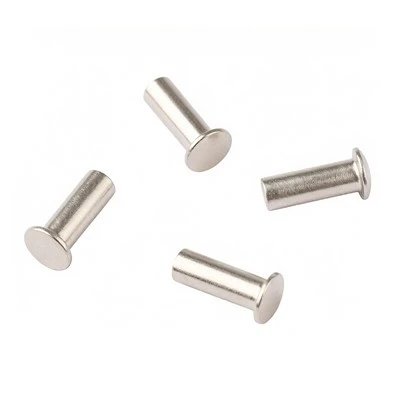
First, let’s cut through the confusion around what a solid rivet actually is, because that’s where most of the misinformation starts. Unlike blind rivets, which you can set from one side of a material, or pop rivets that are designed for quick, temporary installations, solid rivets are permanent fasteners. They’re made from a single piece of malleable metal—common grades like mild steel, aluminum, stainless steel, and copper—and they work by deforming a solid “shop head” (the pre-formed head on one end) into a second, rounded “manufactured head” on the other end once you apply force. That deformation is what creates the clamp and shear strength that makes solid rivets so reliable for critical applications. It’s also why the hole you put the rivet through matters more than with almost any other fastener.
Now, to the core question: Do you need to pre-drill? The short answer is: For 99% of professional, load-bearing applications, absolutely. There’s a small exception for very thin, soft materials like sheet aluminum under 1/16th of an inch, or minor repairs where a rivet is replacing an existing, properly sized hole. But let’s dive into why pre-drilling is non-negotiable for most work, and why skipping it is a shortcut that will almost always come back to bite you.
Let’s start with material compatibility and hole integrity. If you take a solid rivet and try to drive it through two pieces of steel or aluminum without a pre-drilled hole, what happens? You’re basically forcing a tapered or straight shank through solid material, which creates radial pressure. For thin materials, this can cause the material to crack, bend, or tear at the edges of the intended hole. For example, a common mistake we see hobbyists make when restoring vintage motorcycle frames is trying to hand-drive a 3/16” steel solid rivet through 1/8” mild steel tubing. Without a pre-drilled hole, the rivet shank will bend the thin tubing wall instead of deforming to form a tight joint. Even on thicker materials, pre-drilling ensures the rivet fits with a consistent, controlled clearance—usually between 0.001 and 0.003 inches for most solid rivet grades, per industry standards. This clearance isn’t random: too tight, and you’ll have to hammer the rivet so hard that it cracks the material or breaks the rivet itself; too loose, and the joint will have play, leading to shear failure under load.
I remember a project we worked with a local bridge fabricator on three years ago. They’d cut corners on a small pedestrian bridge repair, skipping pre-drilling 24 1/4” solid steel rivets for the steel gusset plates connecting the trusses. They tried to drive the rivets with an air hammer, and within six months, three of the rivets had sheared, and two gusset plates had pulled free from the main truss. When they brought the failed rivets to our warehouse, we measured the holes they’d tried to punch: each hole was off-center by at least 1/16th of an inch, and the material around the holes had micro-cracks from the forced penetration. That repair had to be redone with fully pre-drilled holes, and the fabricator now requires our team to pre-cut and size all rivet holes for their projects before they even pick up their rivets. It’s a costly mistake they never repeated.
Another key point is rivet deformation and joint strength. Solid rivets rely on 100% contact between the shank and the hole to distribute load evenly. If the hole isn’t perfectly sized and aligned, when you set the rivet, the shank will deform unevenly. A pre-drilled hole ensures the shank expands uniformly as you form the manufactured head, creating a solid, pressure-tight joint. For critical applications like marine hulls, pressure vessels, or structural steel, this even deformation isn’t just about strength—it’s about safety. A friend who runs a small boat repair shop told me a story about a 28-foot fishing boat he’d worked on where the owner had skipped pre-drilling to replace rivets in the hull. A week into a deep-sea trip, the rivet had pulled free, causing a 12-inch gash in the hull. The boat was almost lost, and the repair cost three times what it would have if they’d pre-drilled the holes.
Now, let’s talk about that small exception I mentioned earlier: when you might not need to pre-drill. This is almost exclusively for replacing a single rivet in a pre-existing, properly sized hole. For example, if you’re patching a piece of sheet metal that has a single old solid rivet, and the hole is already the exact right size for a new rivet, you can sometimes drive the new rivet in without re-drilling—so long as you make sure the hole isn’t cracked or oversized. We always recommend reaming or cleaning out the old hole first to remove any corrosion or debris, but in a pinch, that’s an acceptable workaround. Another rare case is using very soft solid rivets (like copper or pure aluminum) on ultra-thin materials (under 0.040 inches, about the thickness of a standard postcard). Even then, we always advise test driving a scrap rivet first, because the risk of cracking is still high.
So, what’s the right way to pre-drill for solid rivets, to get the best results? As a solid rivet supplier, we get asked about this all the time, and there’s a standard set of guidelines we share with every customer, tailored to the rivet grade and application. First, always use a drill bit specifically for the material you’re working with. For steel rivets and steel materials, use a high-speed steel (HSS) drill bit; for aluminum or marine-grade stainless steel, use a cobalt bit or a bit designed for soft non-ferrous metals. Second, size your drill bit to the rivet’s nominal diameter. For example, a 3/16” solid steel rivet requires a 3/16” drill bit, with a tolerance of ±0.001 inches. A 1/4” rivet uses a 1/4” drill bit, and so on. This ensures the clearance is just right—too big, and the rivet will rattle; too small, and you’ll have to force it, causing cracks. Third, always deburr the hole after drilling. Burrs on the edge of the hole will prevent the rivet from seating flush, and can cause stress points that lead to failure. A quick pass with a countersink bit or a deburring tool will fix this.
Wait, but what about self-piercing solid rivets? I hear this question a lot too, because there’s a lot of confusion between traditional solid rivets and the newer self-piercing variants. Self-piercing solid rivets are designed to pierce through thin materials without a pre-drilled hole—they have a sharp, tapered tip that cuts through the material as you set the rivet. These are great for very thin materials, automotive body panels, or quick repairs, but they still have limitations. They can’t be used on materials thicker than 1/4 inch, and they’re not rated for high-load structural applications, because the hole they create is slightly irregular. We only recommend self-piercing rivets for non-critical, light-duty jobs, and even then, we tell customers to test the joint strength before full installation. If you’re building a trailer hitch, a bridge truss, or a marine hull that will carry heavy loads, traditional solid rivets with pre-drilled holes are still the only reliable option.
Let’s also address some common myths we hear at the warehouse. One myth is that pre-drilling weakens the material around the joint. The opposite is true, when done correctly. A properly sized, clean hole removes material that would otherwise be distorted by a non-pre-drilled rivet, and the uniform deformation of the rivet creates a stronger joint than one formed by forced penetration. Another myth is that pre-drilling is too time-consuming. We’ve had customers tell us they skipped pre-drilling to save time, only to spend twice as long fixing a failed joint or replacing bent rivets. Pre-drilling adds 10 minutes per rivet at most, and that time is paid back in the longevity and reliability of the joint.
As a solid rivet supplier, we’ve tested this over and over. We recently conducted a joint strength test with a structural engineering firm, comparing three installation methods for 1/4” mild steel solid rivets: pre-drilled, forced penetration, and self-piercing. The pre-drilled joints had an average shear strength of 2,400 psi, well above industry requirements for structural steel. The forced penetration joints had an average shear strength of 1,750 psi, and 3 out of 12 joints failed during the test. The self-piercing joints had an average shear strength of 1,200 psi, and 5 out of 12 failed. That data isn’t just numbers on a page—it’s proof that pre-drilled joints are not just the safe choice, but the strong choice.
Now, I want to make this personal, because I’m not just a guy selling fasteners—I’m someone who’s been in your shoes, standing in a workshop at 2 a.m. trying to finish a project, wondering if you can cut a corner. Last year, I helped a group of volunteers restore a historic fire truck for our local fire department. We were replacing the rivets on the truck’s steel frame, and at one point, one of the volunteers tried to skip pre-drilling a 5/16” rivet, saying it would save an hour of work. I pulled him aside and showed him the test data we keep in our warehouse, and told him about that bridge fabricator from three years ago. We pre-drilled the hole, set the rivet, and that truck has now been in two parades, and has carried a full fire crew and equipment on multiple runs. That’s the kind of reliability solid rivets are supposed to deliver, and you don’t get that by cutting corners.
At the end of the day, the answer to “Do solid rivets need to be pre-drilled?” depends on your application, but for any job where safety, longevity, and load-bearing strength matter, pre-drilling is non-negotiable. It’s the step that turns a random fastener into a permanent, reliable joint that will last decades, not months.
If you’re working on a project and aren’t sure what kind of rivet to use, or what size drill bit you need for pre-drilling, our team is here to help. We supply solid rivets in all grades, sizes, and types, and we can offer tailored guidance for your specific application—whether you’re a structural fabricator, a hobbyist restoring a classic car, or a marine repair specialist. We don’t just sell fasteners; we help you get the job done right, the first time. Reach out to our team to discuss your project needs, and we’ll make sure you have the right rivets, tools, and guidance to get it done.
Nameplate Rivets References
American Society of Mechanical Engineers. (2020). ASME B18.1.1: Fasteners for Permanent Joints – Solid Rivets. ASME International.
Marine Fabricators Association. (2021). Recommended Practices for Solid Rivet Installation in Marine Hulls. MFA Technical Bulletin 412.
National Association of Structural Steel Fabricators. (2022). Structural Fastener Installation Guidelines: Solid Rivets. NASF Design Standard 7.8.
Wenzhou Liao Fasteners Co., Ltd.
As one of the most professional solid rivet manufacturers and suppliers in China, we also support customized service. Welcome to wholesale high quality solid rivet in stock here from our factory. If you have any enquiry about cooperation, please feel free to email us.
Address: No.93 Liaodong Road, Liao Subdistrict, Ouhai District, Wenzhou City, Zhejiang Province, China
E-mail: zhengyue1687@163.com
WebSite: https://www.liaomet.com/
