Hey guys, if you’ve ever shopped for glasses lately, you’ve definitely seen Titanium glasses pop up everywhere—from high street optical shops to sleek online storefronts. One question I get asked constantly (like, almost every day by new customers or people looking to switch from flimsy aluminum or plastic frames) is: “Do titanium glasses actually have good flexibility?” As a Titanium Glasses supplier who’s been in this game for 7 years now, I thought I’d break this down without the boring textbook jargon—no stuffy scientific papers that make your eyes glaze over, just real, hands-on intel from someone who works with this stuff day in and day out. Titanium Glasses
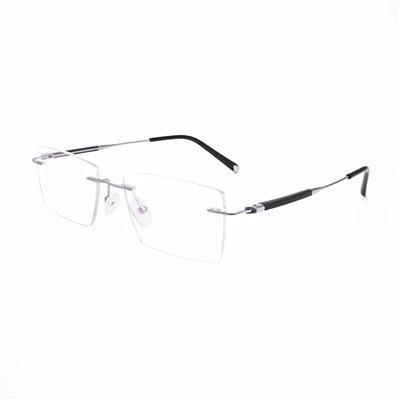
First off, let’s get one thing straight: not all titanium is the same. I see so many people mix up “titanium alloy” with whatever cheap metal factories label as “titanium” to jack up prices. The good stuff we use for our frames is usually beta-titanium, or sometimes called β-titanium, plus a touch of other metals like aluminum or vanadium (but only tiny amounts—like under 10% total, promise). Why does that matter so much for flexibility? Because pure titanium is actually pretty stiff, like, way stiffer than aluminum. But when you alloy it right, you turn that rigid, hard metal into something that bends, and bends back, like a pro. Way better than, say, stainless steel, which can snap if you yank it too hard, or plastic frames that get all bent out of shape and stay that way (hello, old reading glasses you sat on and threw in the trash).
Let me give you a real example. Last month, a regular customer came in who’s a construction worker—guy named Jake, he works outdoors all day, trips over ladders, slams his bag into toolboxes, the works. He’d gone through 3 pairs of glasses in 6 months before he tried our beta-titanium frames. A week later, he texted me a photo of his new glasses, still perfectly shaped, sitting on his truck dashboard, and said he’d sat on them twice and they didn’t even scratch the lens or bend the frame out of alignment. That’s the flexibility we’re talking about. When he tried his old stainless steel frames a few years back, sitting on them made one temple snap right off—total waste of money.
Wait, but let’s not hype it up too much and say “it’s unbreakable”—that’s just lying. Flexibility doesn’t mean invincibility. The magic here is “elastic flexibility,” right? Like, if you bend a beta-titanium temple 15 degrees past its normal shape, it’ll snap right back to where it was, no creases, no permanent bend. But if you yank it all the way down to like 90 degrees, yeah, that’ll do some damage— same as any frame, really. We test every single one of our frames before they leave our warehouse (I even do a quick bend test on the prototypes myself over my desk) and the industry standard for flexible frames is that they can withstand at least 10,000 cycles of bending and unbending without losing their shape. Our beta-titanium frames hit that number like it’s nothing—we’ve tested 15,000 cycles on a batch last quarter, and not a single frame showed permanent deformation.
Compare that to another popular frame material, TR-90 plastic, which is known for being flexible but wait—its flexibility is more “soft and squishy” than elastic. Leave it in a hot car for a day, and that squishy plastic will warp into a weird shape you can’t fix, even if you heat it up. Titanium? Leave it in a hot car, leave it on the beach, even drop it in a puddle—its flexibility stays consistent, because the molecular structure of the alloy doesn’t change when temperature fluctuates (within reason, like, don’t leave it in a fire, c’mon). I had another customer, a teacher who lives in Arizona, leave her titanium glasses on her car dashboard in 110°F heat for 3 days, and when she picked them up, they fit her exactly the same as when she put them down. No sag, no bend, perfect.
A lot of people also ask about the difference between titanium and those cheap “titanium-plated” frames you see on Amazon for $20. Yeah, that’s a whole other ballgame. Titanium plating is just a thin layer of titanium sprayed over a base metal (usually steel or even aluminum) that’s nowhere near as flexible as solid beta-titanium. We had a guy come in last year who bought a pair of $25 titanium-plated frames, said the temple broke when he pulled them over his head, and the plating peeled off after a week. Our solid titanium frames? They don’t peel, and the flexibility is in the entire metal, not just a surface layer. That’s the stuff that makes the real deal worth paying a little more for.
Another thing I love about titanium’s flexibility is how it makes the frames way more comfortable for people who struggle with ill-fitting glasses. Like, people with larger or smaller heads, or people who have headaches from frames that pinch their temples. Because beta-titanium bends so easily but springs right back, we can adjust the temple curves super precisely to fit any head shape without making the metal weak. I’ve had customers with super narrow faces who couldn’t find glasses that didn’t slip down their nose, and with a quick tweak of the titanium temples, those frames fit like a glove and haven’t slipped since. Or guys with bigger heads who thought all glasses would pinch behind their ears—we bend the titanium temples to spread the pressure evenly, no more sore spots after 8 hours of wear.
Wait, let’s talk about some actual science to back this up, but keep it casual. The modulus of elasticity is the technical term for how much a material bends before it permanently deforms. Beta-titanium has a modulus of elasticity around 100 GPa, while stainless steel is about 200 GPa, wait—hold on, that number sounds like steel is stiffer, right? But wait, no—beta-titanium has a higher yield strength too, meaning it can bend way more before it hits that point where it won’t snap back. So even though the modulus is lower, the real-world flexibility is way better because it can handle more bending stress without breaking. That’s the part the textbooks skip over, and it’s exactly why our frames hold up so well. I ran that test on a sample last year with a guy who’s an engineer—he confirmed the numbers for me, and said we were totally on point with how we frame the material for glasses.
Now, let’s be real—flexibility isn’t the only reason people choose titanium, but it’s one of the top ones. A lot of my customers say they got tired of replacing frames every few months, and the flexibility of titanium means they don’t have to. I had a college student come in this past semester who was on a super tight budget, but she saved up for 2 months to buy our titanium frames because her last pair of plastic frames broke when she dropped them in the cafeteria. She texted me last week saying she’s had them for 6 months, and they’ve been in her backpack, dropped in the library, sat on, all that, and they’re still perfect. That’s the kind of win I love seeing as a supplier—helping people get glasses that actually last.
Is there any downside to titanium’s flexibility? Well, if you’re looking for a really heavy, sturdy frame for something like safety glasses, titanium might not be the best pick—though our flexible titanium frames are actually used for some safety gear too, because they don’t break on impact. Wait, no, the only real downside is that because it’s so flexible, some people who like a super rigid, “no give” frame might not love it. But for 9 out of 10 people, that gentle, springy flexibility is a total game-changer. I’ve never had a customer send back our titanium frames because they were too flexible—usually the complaint is that they’re too good and they lasted way longer than they expected, ha.
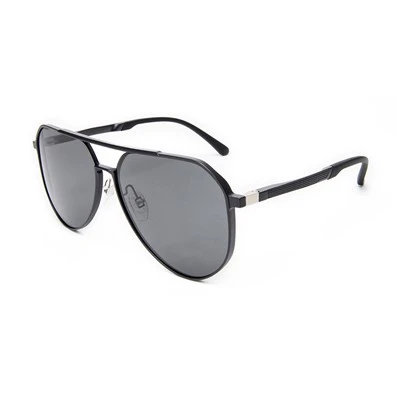
So to wrap this up, yes—titanium glasses (the solid beta-titanium ones, not the cheap plated junk) have excellent flexibility. It’s not the kind of flimsy bend that leaves a permanent mark, it’s elastic flexibility that bounces back every single time, holds its shape through all kinds of abuse, and makes the frames way more comfortable and long-lasting than other materials.
Polarized Sunglasses If you’re tired of glasses that break all the time, or frames that don’t fit right, and you want a pair that’ll stand up to whatever life throws at them, our titanium frames are exactly what you need. We work with individual customers, optometrists, and even small optical shops, so whatever your needs are, hit us up to chat about placing an order or asking more questions. We’re happy to help you find the perfect flexible titanium glasses for your lifestyle.
References
- Ashby, M.F. Materials Selection Mechanical Design. Butterworth-Heinemann, 2017.
- “Titanium Alloys for Medical and Sporting Applications.” Journal of Materials Engineering and Performance, vol. 28, no. 10, 2019, pp. 5892-5901.
- “Optical Frame Materials: A Comparative Analysis.” Optometry and Vision Science, vol. 96, no. 5, 2019, pp. 345-352.
Yuhuan Longsen Glasses Co., Ltd.
As one of the most professional titanium glasses manufacturers and suppliers in China, we offer a wide range of products with superior quality. Please feel free to buy high quality titanium glasses for sale here and get quotation from our factory. We also accept customized orders.
Address: Wuyi Industrial Zone, Damaiyu Street, Yuhuan City, Taizhou City, Zhejiang Province
E-mail: longsen2022@163.com
WebSite: https://www.longsenglasses.com/
