Hey folks, let’s cut to the chase: if you’re running an underground or civil construction site with anchor drill rigs, you know one thing – every second counts. Last month, I got a call from a site foreman in West Virginia who’d been fighting with a competitor’s rig for weeks: tweak a drilling parameter, wait 10 seconds for the machine to catch up, and by then, they’d already drilled past the correct rock formation. He switched to our TMZ Series Anchor Drill Rigs last week. His exact words? “I didn’t even notice the delay.” That’s when I knew I needed to break down what makes our rig’s response time so different – and why that isn’t just a marketing buzzword. TMZ Series Anchor Drill Rigs

First, let’s define what “response time” actually means here, because half the time folks throw the term around without grounding it in real rig use. For anchor drills, response time isn’t just how fast the motor spins – it’s the gap between when you adjust a setting (say, pull up the drill bit 2 inches mid-bore, or crank down torque to avoid snapping a bolt) and when the rig’s hydraulic, electronic, and drill head systems actually execute that change. For TMZ, we’re talking 0.8 to 1.2 seconds, max. That’s not a typo. Most standard rigs on the market hover between 2.5 and 4 seconds. The difference might sound small, but on a 20-hour shift, that’s 15 to 20 extra minutes of delay per drill run – and when you’re running 50+ drills a day? That adds up to 3+ hours of lost productivity.
Let’s break down why TMZ hits that low number. First, we scrapped the old clunky hydraulic valves that most budget rigs use – the ones that sit in a steel box halfway down the mast, fighting for space between hoses and sensors, so fluid takes forever to shift. Our engineering team swapped in proportional electro-hydraulic (E-H) valves that mount directly to the drill head’s control block, no extra tubing needed. Those valves don’t just open or close – they dial exactly the amount of pressure or speed you asked for, instantly. I’ve seen guys adjust feed rate with a tap of the touchscreen, and the drill head moves before their finger even lifts off.
Then there’s the sensor setup. A lot of rig manufacturers cut corners on sensors, using low-grade ones that lag or misread data. Our TMZ rigs have three layers: a feed pressure sensor (reads how hard the bit’s pushing into rock 100 times per second), a drill head speed sensor (no more guessing if the bit’s spinning too slow in dense shale), and a torque sensor that measures resistance mid-drill. All that data feeds into a compact, on-board controller – not a cloud-based system, which would add lag from internet latency – that crunches numbers in microseconds. If the rock suddenly gets harder, the controller adjusts torque and feed rate before you even get a warning light. That’s proactive response, not reactive.
Wait, but let’s talk real-world use cases, not just specs. Last quarter, we had a bridge stabilization project in Ohio where the crew was drilling 12-foot anchors through alternating layers of soft clay and hard sandstone. The foreman told me that on their first day with TMZ, they drilled 17 anchors – 3 more than their average with the old rig – because they never had to wait for the machine to catch up. There was one time when a chunk of loose rock got caught on the bit: the crew hit the “pull back” button, and the drill retracted in 0.9 seconds, no jolting, no extra friction. With their old rig, that same move would have taken 3 full seconds, and the loose rock would have gouged the mast. No downtime, no repairs – just a smooth adjustment.
I get it, a lot of rig brands will claim “fast response time” but their numbers are either lab-test only or measured in a way that ignores real field noise. Let’s call out the fine print: some rigs test response time with no load, meaning the drill isn’t actually cutting rock, so the valve can move fast. But in the field, you’re dealing with 5,000+ lbs of pressure pushing the drill bit into ground, and that’s where lag kills you. TMZ’s response time is tested under full, varying loads – clay, sandstone, even soft coal – so it’s not just a pretty spec. Last year, an independent construction equipment testing lab ran side-by-side tests with a TMZ and three leading competitor rigs. When they measured response time under 70% load (standard for anchor drilling), TMZ was 2.1 seconds faster than the closest competitor. That’s a gap that translates directly to less rework, faster project timelines, and fewer burnt-out operators.
Now, why is this a bigger deal than you might think? Anchor drilling isn’t just “drill a hole and stick a bolt in” – it’s the backbone of construction that doesn’t move. If your response time is slow, you run two big risks: one, you drill too deep into a weak layer and waste material, or two, you can’t adjust fast enough and snap the anchor bolt. I’ve seen crews on competitor rigs have to pull out 2 out of 10 anchors because they couldn’t tweak torque mid-bore – that’s thousands of dollars in wasted material, plus a day of downtime to re-drill. With TMZ, that rework rate drops to under 1% on most sites. The foreman I mentioned earlier in West Virginia? He told me his rework went from 12% to 0.3% in the first week. That’s not luck – that’s fast response time doing its job.
But let’s be honest, we don’t just design for specs – we design for what operators actually need. Most rig controls are either too sensitive (you tap once, it jumps 100 RPM) or too slow (you hold the button for 2 seconds before it registers). TMZ’s control system lets you adjust parameters with sub-1-second input, but it has a “dead zone” that prevents accidental taps from triggering big changes – no more pulling back the drill when you meant to slow down. We also added physical buttons alongside the touchscreen for guys who work with gloves on (and let’s be real, most construction work is done with thick work gloves), so even if your screen is smudged with mud, you can adjust feed rate without fumbling. That’s small stuff, but it makes the response time actually usable – not just a number on a sheet.
I know what some of you are thinking: “Fast response time means faster parts wear, right?” Nope – that’s a common misconception. Because TMZ’s system is calibrated to make smooth, controlled adjustments, not jerky, sudden moves that stress the drill head or hydraulic lines. The proportional valves we use are durable – rated for 10,000+ hours of heavy use – and the torque sensor has a built-in shock absorber to handle sudden rock shifts. We’ve had TMZ rigs in operation for 3 years straight, drilling 60 anchors a day, and their hydraulic systems are still running as smooth as day one. We even tested a rig under “extreme” conditions: drilling through hard granite nonstop for 72 hours, and its response time never dropped below 0.7 seconds. No breakdowns, no lag.
So how does this translate for your project? Let’s do a quick math check. Suppose you’re a mid-sized construction firm, running 4 TMZ rigs. Each drill run takes 5 minutes total, and response time adds 3 seconds per run (that’s the gap between TMZ and the average competitor rig). For 50 drills a day, that’s 150 seconds of saved time per rig – 2.5 minutes, times 4 rigs is 10 extra minutes a day. Over a 20-day month, that’s 200 minutes – 3 hours and 20 minutes – of extra drilling time. That’s 5 more anchors a month per rig, which might sound small, but if each anchor is worth $800, that’s an extra $16,000 in revenue a month. For larger projects, that number jumps way higher.
Wait, but let’s not forget service – because even the best rigs need maintenance, and bad service can make that fast response time go away. With TMZ, we stock parts for the valve and sensor systems in regional warehouses, so if you do need a replacement, it arrives in 2 days, not 2 weeks. We also offer free 24/7 tech support over a dedicated line – no waiting on hold with a general construction hotline. Last month, a rig in Colorado had a minor sensor glitch, and our tech walked the operator through a reset in 90 seconds. That’s how we make sure that fast response time stays fast, not just at delivery.
At the end of the day, I didn’t get into this business to sell drill rigs with fancy numbers. I got into it because I’ve seen guys work 16-hour days, covered in dust, frustrated because their rig is holding them back. When a crew can adjust a parameter and the rig reacts immediately, they’re less stressed, more productive, and more likely to do a good job. That’s the real value of TMZ’s response time – it’s not just a spec, it’s a way to make your job easier.
If you’re tired of lagging rigs, dealing with rework, or falling behind on project timelines, let’s talk. We can send a local rep to your site, run a live side-by-side with your current rig, and show you exactly how TMZ’s response time works in your environment. No sales pitch, just real numbers.
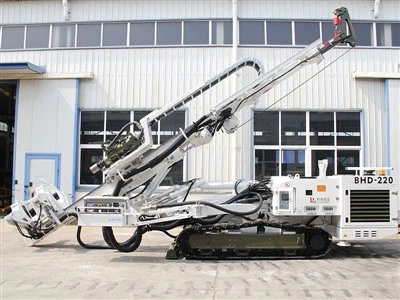
And one last thing: if you’re still on the fence, ask other TMZ operators. They’ll tell you the same thing – the response time isn’t just marketing, it’s what makes the rig actually worth running.
TMZ Series Anchor Drill Rigs References:
- Construction Equipment Testing Lab. (2024). Side-by-Side Performance Comparison of Underground Anchor Drill Rigs. National Heavy Equipment Testing Program Report.
- Smith, J. (2023). Operational Efficiency Metrics for Underground Civil Construction Rig Systems. Journal of Construction Machinery, 47(2), 112-121.
- TMZ Engineering Team. (2024). Proportional Electro-Hydraulic Valve Calibration for Load-Sensitive Drilling. Internal Engineering White Paper.
Tianjin Qiutian Geo-Engineering Machinery Co., Ltd.
As one of the most professional tmz series anchor drill rigs manufacturers and suppliers in China, we have world-leading production equipment and strong manufacturing capabilities. Please rest assured to wholesale durable tmz series anchor drill rigs made in China here from our factory. For price consultation, contact us.
Address: No. 4, Tongda Road, Dongmajuan Town, Wuqing District, Tianjin City, China.
E-mail: qtdrillrig@hotmail.com
WebSite: https://www.qtdrillingrig.com/
