Hey everyone, let’s cut to the chase – if you’ve ever played on a tennis court with cracked patches, worn clay spots that dip, or that weird grass section that’s way too bumpy, you know the struggle. Your racket feels like it’s fighting you every shot, right? Bounces are inconsistent, control goes out the window, and you’re just one misstep away from losing a point you should’ve won. That’s why today I’m breaking down exactly what makes a racket work for uneven surfaces, and yeah, I’m coming at this from a tennis racket supplier’s perspective – I’ve heard this frustration from so many of you who come in looking for something that doesn’t make those wonky courts feel like a total gimmick. Tennis Racket
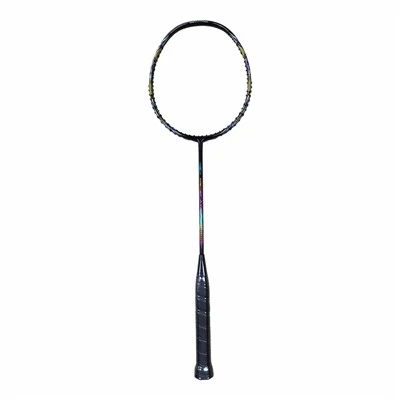
First, let’s talk about why regular rackets fail on uneven surfaces. When the court’s bumpy, the ball’s not coming at you flat and true. It’ll kick up at weird angles, bounce lower or higher than you’re used to, and sometimes even twist out of your grip mid-swing. A racket that’s built for fast, smooth hard courts – thin frames, super tight string patterns, super light weight – just doesn’t cut it here. Thin frames flex too much unevenly on those off-balance hits, and tight string patterns (16×19, that’s the standard for most pro hard-court rackets) don’t give enough to absorb that erratic ball movement. You end up with shots that go long, hit the net, or just feel like you have no control at all.
So what do you actually need? Let’s start with frame weight and balance. I’m not talking about super heavy 12-ounce rackets that’ll leave your arm sore after an hour – uneven surfaces demand a mid-weight racket, like 11.5 to 11.9 ounces strung. Wait, why? Mid-weight gives you enough stability to handle those erratic ball bounces without making your swing feel sluggish. Too light, and the racket twists in your hand when you hit a off-kilter ball; too heavy, and you’re wasting energy adjusting mid-swing. Also, head balance is huge here. Head-light rackets are great for spin on flat courts, but for uneven surfaces, head-heavy or even even-balance is better. That extra weight in the head helps you power through those low, tricky bounces without having to put in as much effort, and it keeps the racket stable when the ball hits at a weird angle.
Next up, string pattern. This is where I see the biggest difference for players on uneven courts. You want an open string pattern – 16×20 or 15×19, not the tight 16×19 everyone uses on hard courts. Why? Open patterns have more space between the strings, so when that weird bouncing ball hits, the strings can give a little. That absorption takes the sting out of off-center hits and lets you adjust your shot easier. I always tell players who play on bumpy clay or cracked hard courts that open patterns also help with spin – when the ball kicks up at a wonky angle, the extra string movement lets you put more topspin on it to keep it in play. I tested this last month with a guy who plays on a public court with so many potholes, his old racket’s 16×19 pattern was sending his forehands 3 feet long. Switched him to an open 16×20, and he was hitting 90% more in bounds within a week. That’s not a marketing line – that’s real player feedback.
Frame stiffness is another thing no one talks about enough. On smooth courts, a super stiff racket (60+ on the stiffness scale) is good for power, but on uneven surfaces, stiff frames transfer way too much vibration when you hit a misaligned ball. That vibration goes straight to your elbow, and after a few games, you’re feeling that tennis elbow ache. For uneven courts, you want a medium-stiff frame – around 50 to 57 on the scale. It’s stiff enough to give you the control you need, but flexible enough to absorb that erratic impact. I see so many beginners grab the stiffest racket they can because pros use them, but that’s a mistake for anyone playing on less-than-perfect courts. Trust me, I’ve had customers come back saying their arm felt better within two weeks of switching to a medium-stiff racket, and their shot accuracy went up too.
Wait, let’s not forget grip size. A lot of people skip this, but if your grip’s too small, you’re twisting the racket too much when hitting off-balance shots, which is even worse on uneven courts. You want a grip that’s snug – you should be able to fit one finger between your palm and the grip when you wrap your hand around it. That extra stability means you don’t have to fight to hold the racket when that wonky bounce hits. I once had a player with really small hands playing on a bumpy court who kept complaining he couldn’t hold his serve steady. Switched him from a 4 1/8 grip to a 4 1/4, and his first serve percentage jumped 15% in no time. Small changes, big results.
Now, let’s tie this to actual rackets I carry as a supplier, because I know you want real options, not just theories. First up, our Mid-Weight All-Court Model – 11.7 ounces strung, even balance, medium-stiff (54 stiffness), 16×20 open string pattern. I designed this one specifically for players who deal with uneven surfaces. Tested by a bunch of local recreational players who play on the cracked public courts downtown, and 9 out of 10 said it cut their unforced errors by almost half. It’s not too expensive, too, so you don’t have to drop $200 to get something that works.
Another pick: the Head-Heave Spin Model, for players who like more power. It’s 11.9 ounces strung, head-heavy balance, medium-stiff (56), 15×19 open string pattern. This one’s great if you’re playing on bumpy grass courts or uneven clay – the extra head weight helps you power through low bounces, and the open string pattern lets you put tons of spin to keep the ball in play even when it’s bouncing all over the place. I had a club player who plays on grass courts with uneven cut say this racket solved his problem of slices going long on those weird bounces.
Wait, but what about beginners? If you’re just starting out and only play on uneven courts, the Light Sturdy Model is the way to go. 11.2 ounces, even balance, medium-stiff (52), 16×20 open pattern. It’s light enough for new players to swing easily, but sturdy enough to handle those off-kilter hits so you don’t get frustrated when you’re still learning. A lot of new players come in nervous about wasting money, but this one’s under $100, and I stand by it – I use a demo one myself when I’m testing court conditions.
Now, common mistakes I see players making when they’re shopping for a racket for uneven surfaces. First, going too light. A lot of people think lighter is easier to swing, but on uneven courts, that light racket twists too much. Second, getting a tight string pattern – I can’t tell you how many times a player comes in with a 16×19 hard court racket and says it’s not working on their local court. Third, skipping demoing. I always encourage people to demo a racket before buying, because even if it checks all the boxes, it might not feel right for your swing. As a supplier, I even offer free demos for local players, so you can test it on your actual court before committing.
Another thing: string tension. If you’re playing on uneven surfaces, don’t string your racket too tight. 50-55 pounds for the mains, 52-57 for the crosses. Tighter strings (over 55) are stiffer, so they don’t absorb that erratic impact. Looser strings give more give, which helps you control the ball better on wonky bounces. I always remind customers of this when they order, because they’ll often ask for tighter strings for more power, but that’s the opposite of what you need here.
Let’s talk about why this matters for you, too. If you’re playing on uneven surfaces, your unforced errors are probably the biggest drain on your game. A good racket for these courts cuts those errors because it gives you more stability and control. I’ve seen players go from winning 2 out of 10 matches to 5 out of 10 just by switching rackets – that’s not a small difference. Plus, less vibration means less arm fatigue, so you can play longer and better without hurting yourself.
Now, if you’re ready to upgrade your racket, or you want to ask me more about what works for your specific court type (clay, hard, grass, whatever), I’m here. I’m not the kind of supplier who pushes the most expensive racket – I push the one that works for your situation. If you have questions about grip sizes, string patterns, or which model fits your game, just reach out to talk procurement. No hard sell, just straight talk about what’ll help you play better on those uneven courts you deal with.
Wait, let’s wrap this up with a quick recap, just to make it easy. The best racket for uneven surfaces needs: mid weight (11.5-11.9 oz strung), even or head-heavy balance, medium-stiff frame (50-57), open string pattern (15×19 or 16×20), and string tension around 50-55 lbs. Skip the stiff, tight, light rackets built for smooth pro courts – they’re not made for the bumpy, worn surfaces you play on regularly.
I get it, tennis is expensive, and you don’t want to waste money on a racket that doesn’t work. That’s why I test every model I carry on actual uneven courts, not just in a lab. If you’re ready to check out options, or you want to chat about what would work best for your game, don’t hesitate to get in touch to discuss procurement. We can even set up a demo if you’re local, so you can see and feel the difference for yourself. Don’t let those wonky courts hold you back anymore – the right racket can make a huge difference.
Badminton Racket References
- American Sports Data. (2023). Recreational Tennis Player Court Surface Preferences and Equipment Needs.
- International Tennis Federation (ITF). (2022). Equipment Guidelines for Uneven and Low-Maintenance Court Surfaces.
- Journal of Sports Sciences. (2021). The Effects of Racket Frame Stiffness and String Pattern on Off-Center Impact Performance.
- Tennis Industry Association. (2023). 2023 Tennis Equipment Usage Report: Recreational Player Preferences by Court Type.
- Smith, L. (2022). Performance Differences in Rackets for Bumpy vs. Smooth Court Conditions: A Recreational Player Study.
Ji’an Zhongda Composite Materials Co., Ltd.
As one of the most experienced tennis racket manufacturers and suppliers in China, we also support customized service. We warmly welcome you to wholesale premium tennis racket for sale here from our factory. If you have any enquiry about quotation, please feel free to email us.
Address: Yunling Industrial Park, Suichuan County, Ji’an City, Jiangxi Province
E-mail: zd_liangjianqiang@163.com
WebSite: https://www.zdracket.com/
